
AI gets a lot of attention. 👀
Raja Rajamannar of Mastercard is more interested in what it helps people do better.
Stream Episode 607: https://podcast.thoughtbot.com/607
Discussion
AI gets a lot of attention. 👀
Raja Rajamannar of Mastercard is more interested in what it helps people do better.
Stream Episode 607: https://podcast.thoughtbot.com/607
HOW DID WE GET HERE?
(a thread of threads, quotes, and links)
This is a collection of writings and research concerned with how we got where we are today, which is in fact the story of what has been done *to* us, and what has been *taken from us*.
By "us" we're talking about "the 99%", "workers", "wage slaves", all non-owners of private property, "the poor", unhoused people, indigenous people, even plenty of people who swear by capitalism and identify as "capitalist" yet have no capital of their own and no serious hope of ever having any worth speaking of. In other words almost everyone except for the very few who have had the power to exploit us and shape our lives to serve their agenda. We're going to examine institutions and concepts that have deeply altered our world at all levels, both our external and internal realities.
By "here" we are talking about climate crisis and myriad other environmental catastrophes resulting from hyper-excessive extraction, consumption and waste; a world of rampant inequality, exploitation and oppression, hunger and starvation, genocide and war; a world of fences, walls, gatekeepers, prisons, police, bullshit jobs and criminalized poverty; a world overrun with cars and preventable disease; a world of vanishing biodiversity and thriving fascism; a world where "democracy" results in being led by some of the worst of humanity; a world ruled by an imaginary but all-powerful and single-minded god: Capital.
Our inspiration and structural framework for this survey is this quote from "The Prehistory of Private Property", an important work from political philosopher Karl Widerquist and anthropologist Grant S. McCall:
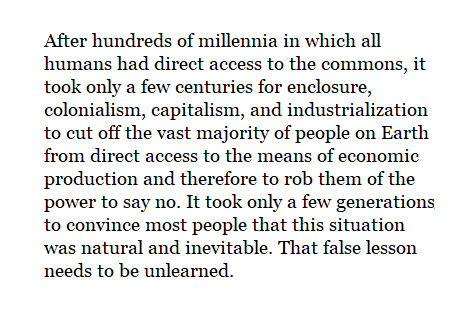
"After hundreds of millennia in which all humans had direct access to the commons, it took only a few centuries for enclosure, colonialism, capitalism, and industrialization to cut off the vast majority of people on Earth from direct access to the means of economic production and therefore to rob them of the power to say no. It took only a few generations to convince most people that this situation was natural and inevitable. That false lesson needs to be unlearned."
https://widerquist.com/books-3/#2b
("This book examines the origin and development of the private property system to show that three commonly held beliefs about private property are false: the belief that individualistic private property develops naturally, the belief that private property promotes negative freedom, and the belief that inequality is natural and inevitable.")
Also recommended: "Prehistoric Myths in Modern Political Philosophy"
https://widerquist.com/books-3/#4b
("This book uses extensive anthropological and historical evidence to falsify the commonly held belief that everyone benefits from the state and/or the property system. Although many people benefit, the least advantaged are worse off in contemporary capitalist states than people typically were in stateless societies with common property systems.")
#capitalism #colonialism #enclosure #PrivateProperty #state #police #inequality #anthropology #environment #ClimateCrisis #economics
1/30
You can help support Servo, an independent web rendering engine, and the health of the web ecosystem by donating:
https://github.com/sponsors/servo
https://opencollective.com/servo
@servo
So much **independent** that you host your files at #Microsoft #git server, *right ?*
I can't donate to projects hosted down there.
@pixelfed Было бы здорово, что бы #pixelfed для android появился бы на основном репозитории @fdroidorg ! Ради такого я бы подождал, и не отвлекал хотелками раннего доступа.
@kookie Related mathematics: https://en.wikipedia.org/wiki/Cox%E2%80%93Zucker_machine
@diffrentcolours incredible 😂
Next we're going to meet a monster and do our best to kill it. This monster is the ghost of the man John Locke, a philosopher known as "the father of liberalism". We're going to spend some time dragging Locke through the mud because his ideas became a linchpin in our whole system of property, justifying atrocities that continue even as we read this together now. It's not that Locke was single-handedly responsible for our plight, but he does serve as an example of the kind of men who used high-sounding words and "moral" arguments to draw us all into a nightmare that enables *them* to "live the dream".
We'll start with this excerpt from an article by political economist @blair_fix "Can the World Get Along Without Natural Resources?" (by all means read the entire excellent article, but for now this excerpt serves our purposes):
"The original sin
From its outset, the field of political economy was not designed, in any meaningful sense, to understand resource flows. Instead, it was designed to explain *class relations*. The goal of early political economists was to justify the income of different classes (workers, landowners and capitalists). They chose to do so by rooting this income in the ‘production of wealth’. What followed from this original sin was centuries of conflating income with ‘production’. This conflation is what allowed Robert Solow to proclaim that the world could “get along without natural resources”.
Let’s retrace this flawed thinking. It starts with a failure to understand property rights. Political economists largely understand property as a productive asset — a way of thinking that dates to the 17th-century work of John Locke (or perhaps earlier). Locke proclaimed that property rights stemmed from ‘natural law’. A man, Locke argued, has a natural right to own what he ‘produces’:
_____
...every Man has a Property in his own Person. This no Body has any Right to but himself. The Labour of his Body, and the Work of his Hands, we may say, are properly his. Whatsoever then he removes out of the State that Nature hath provided, and left it in, he hath mixed his Labour with, and joyned to it something that is his own, and thereby makes it his Property. It being by him removed from the common state Nature placed it in, hath by this labour something annexed to it, that excludes the common right of other Men. For this Labour being the unquestionable Property of the Labourer, no man but he can have a right to what that is once joyned to, at least where there is enough, and as good left in common for others.
_____
Locke’s thinking became known as the ‘labor theory of property’. This theory (and its derivatives) is why political economists misunderstand the role of natural resources. Here’s what happens. If we accept Locke’s argument that you have a right to own what you produce, it follows that your wealth should stem from your output.
Most political economists after Locke accepted this reasoning (at least in part). That meant that the debate was not about whether wealth was ‘produced’, but rather, about *which* ‘factors of production’ were ‘productive’. The physiocrats thought land alone was productive. Marx insisted that only labor was productive. Neoclassical economists proclaimed that, alongside labor, capital too was productive. The debate between these schools played out over centuries. The problem, though, is that it’s based on a flawed premise. The debate assumes that value is ‘produced’. (It’s not.)
To see the flaw, let’s go back to Locke’s theory of property rights. Notice that it’s not really a ‘theory’ in the scientific sense. It doesn’t explain *why* property rights exist. It explains why they *ought* to exist. Locke proclaimed that a man ought to own what he produces. That is his ‘natural right’.
This change from ‘is’ to ‘ought’ is important. It means that we’re not dealing with a scientific theory. We’re dealing with a system of *morality*. The philosopher David Hume was perhaps the first to understand this moral sleight of hand. He noticed that moral philosophers made their arguments more convincing by framing what ‘ought’ to be in terms of what ‘is’. Here’s Hume reflecting on this trick:
_____
In every system of morality, which I have hitherto met with, I have always remarked, that the author proceeds for some time in the ordinary way of reasoning, and establishes the being of a God, or makes observations concerning human affairs; when of a sudden I am surprised to find, that instead of the usual copulations of propositions, is, and is not, I meet with no proposition that is not connected with an ought, or an ought not. This change is imperceptible; but is, however, of the last consequence.
_____
With David Hume’s observation in mind, let’s return to Locke’s ‘theory’ of property. It’s not a ‘theory’ at all — it’s a moral treatise. According to Locke, we *ought* to own what we produce. But that doesn’t mean that we *do*.
To see the consequences of this mistake, we need an actual scientific theory of property rights — a theory that explains why property exists, not why it ‘ought’ to exist. The most convincing theory of private property, in my opinion, comes from the work of Jonathan Nitzan and Shimshon Bichler. To understand property, Nitzan and Bichler argue that we should turn Locke’s idea on its head. Property isn’t a ‘natural right’. It’s an act of *power*.
Property, Nitzan and Bichler observe, is an act of exclusion. If I own something, that means that I have the right to exclude others from using it. It’s this exclusionary power that defines private property. Here are Nitzan and Bichler describing this act:
_____
The most important feature of private ownership is not that it enables those who own, but that it disables those who do not. Technically, anyone can get into someone else’s car and drive away, or give an order to sell all of Warren Buffet’s shares in Berkshire Hathaway. The sole purpose of private ownership is to prevent us from doing so. In this sense, private ownership is wholly and only an institution of exclusion, and institutional exclusion is a matter of organized power.
_____
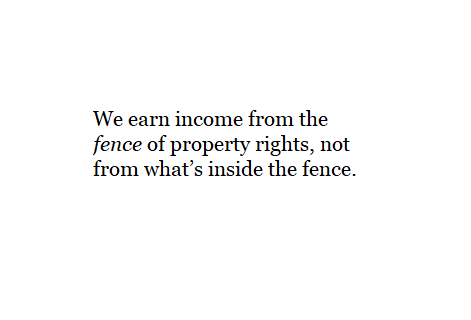
When we think like Nitzan and Bichler, we get a very different view of income. Recall that most political economists see property in terms of the ‘things’ that are owned. They then argue that income stems from these ‘things’. Nitzan and Bichler upend this logic. Property, they argue, is about the *act* of ownership — the institutional act of exclusion. Income stems from this exclusionary act. We earn income from the *fence* of property rights, not from what’s inside the fence. In other words, if you can’t restrict access to your property, you can’t earn income from it."
https://economicsfromthetopdown.com/2020/06/18/can-the-world-get-along-without-natural-resources/
5/30
So I think we in tech are going to have to really face up to two things that the whole #Omarchy thing has exposed.
Funding for #openSource was never really a problem - turns out there was plenty money available for all these years. The money raised so far by #DHH shows that.
The second is that the illusion that the tech industry ever sat on the right side of history when clearly it's just allowed Nazis to hide in plain sight this entire time.
Just been to see the new (for 2026) fox at the Lost Gardens of Heligan and wow it’s a beauty.
I moved my site over to a dedicated host this morning. you guys mind visiting it to see if dns is fully changed over and so I can see if analytics are working?
thanks!
@mrcippy Looks good.
@neil @TimWardCam Exactly, so I'm not sure "companies are already on this" is a particularly good answer if it boils down to "companies are already on making their customer spend huge sums of money replacing otherwise perfectly good kit".
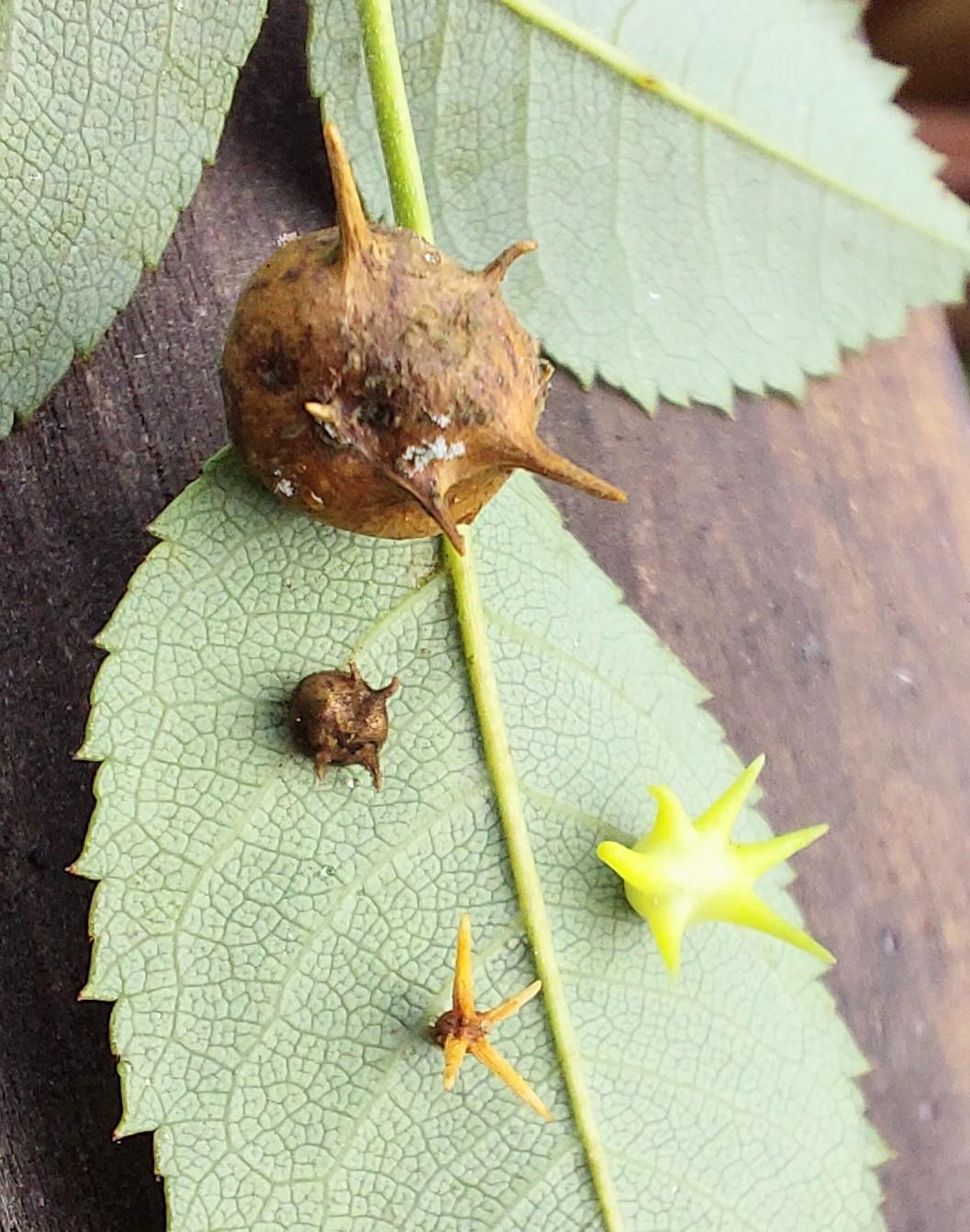
Sometimes called the Sputnik Gall Wasp, the cynipid Wasp,
Diplolepis nervosa causes spiked galls. Seen here on Dogrose in our native hedging....
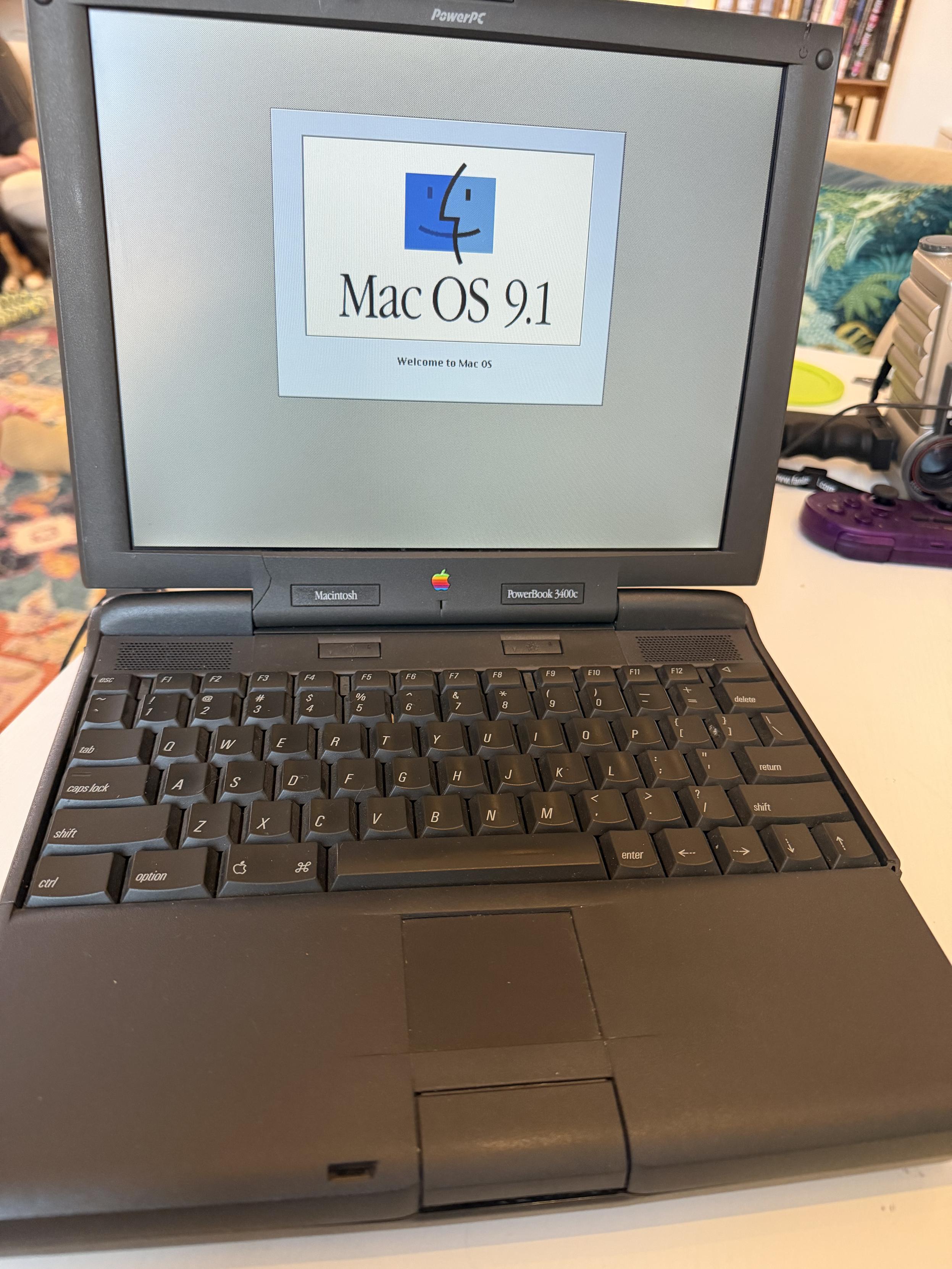
@likesoldmacs It's the first really modern feeling laptop of all my Mac laptops. A really great machine.
@thomasfuchs omg mine has the same exact crack on the lower left display hinge area - but doesn't seem too broken or loose!
And the 240MHz version was the fastest laptop in the world for a hot second!
The W3C Test Suite License is interesting. You use it if you want to make claims about your software like “passes all 𝑛 W3C tests.” It allows you to copy the tests, but you are not allowed to make any changes to them; they must remain byte-for-byte identical to the original.
Totally makes sense if you’re going to make compliance claims.
Alternatively, you may use the tests under the 3-clause BSD license, which allows you to modify them, but then, you can’t make compliance claims.
“Just one extra degree in the water has a significant effect on marine life”
We just hit 100 consecutive days of record ocean temperatures.
@crochet
#crochet
Completed the first #SunFlower 🌻 motif last night, flower, stems and leaves all attached to the frame.
Three more to go, I'm hoping they'll be a bit easier now I know what to do, and hopefully they'll be a little less wonky 😁😁
@redflegias la competenza dovrebbe essere del garante lituano
RE: https://mastodon.macstories.net/@macstories/117270008991565813
And later today, we'll have a special episode of @appstories for everyone covering @viticci's iOS and iPadOS 27 review.
There's a special post-show for AppStories+ subscribers covering the role agents played in the research and review assembly process too.
who could have foreseen https://www.businessinsider.com/oracle-begins-new-round-of-layoffs-2026-9
> The planned cuts reached double-digit percentages on some teams, according to an internal document.
Database servers 500$
Salaries 1000$
Unpaid datacenters 1.000.000.000$
Family endeavors 80000$
someone who is good at the economy please help me budget this.
My name is Larry Ellison and my family is dying
Quite incredible (well, to me) that, in less than five months, the UK's analogue phone network from BT/Openreach will no longer exist.
And, in perhaps four years, there will be no 2G cellular networks.
These are big technological changes - population scale changes! - that I find fascinating.
I know a couple of people who had to buy new (mobile) phones a couple of years ago because although they had "4g" phones they didn't have VoLTE (4g Calling) so when the 3g was switched off they could not make calls but the data service still worked.
It turns out some of the early 4g phones used 4g for data only and relied on the 3g network for calls.
Trying to explain to someone that they had to spend money on a new 4g phone when they already had one was a bit annoying.
@davidgerard Trump's opinion on Truth Social re the slowdown proposal? China, China, China, we're winning, winning, winning! Hard to beat "WHOEVER WINS AI, WINS" for dumb as shit.
@dshan something with that seems likely
Sorry, the app encountered an unexpected error

Install bonfire.cafe
Get the full app experience